Lost Barns
The disappearance of small family farms in New England.
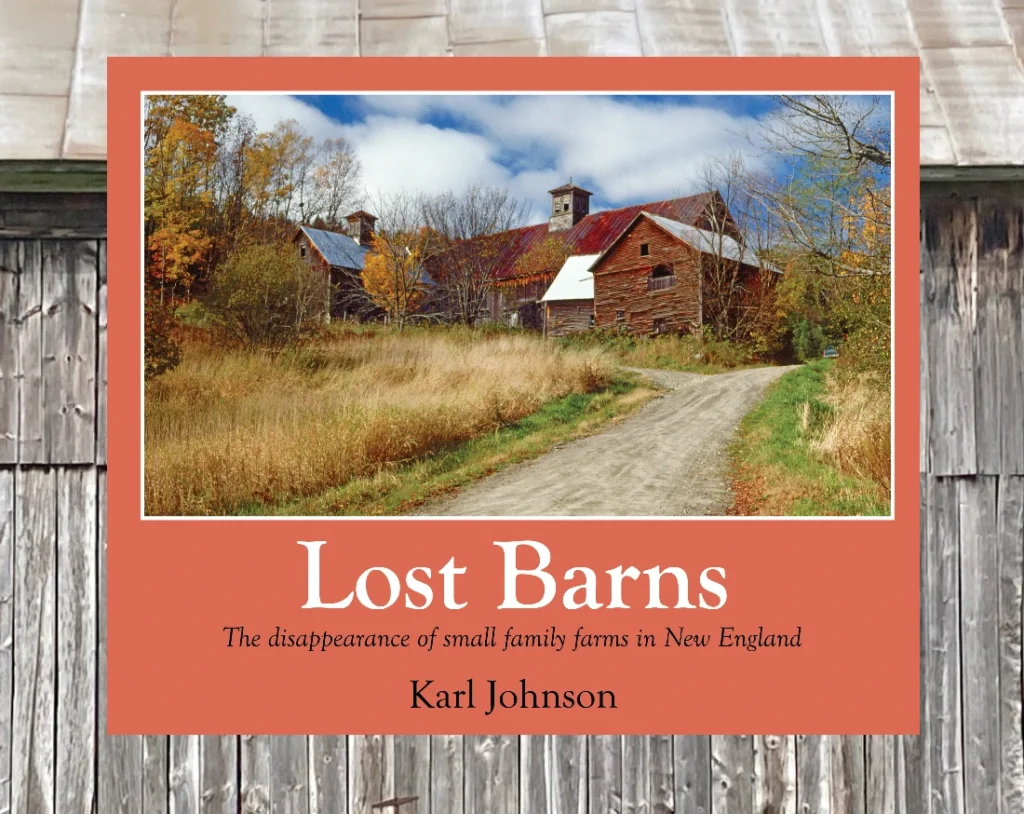
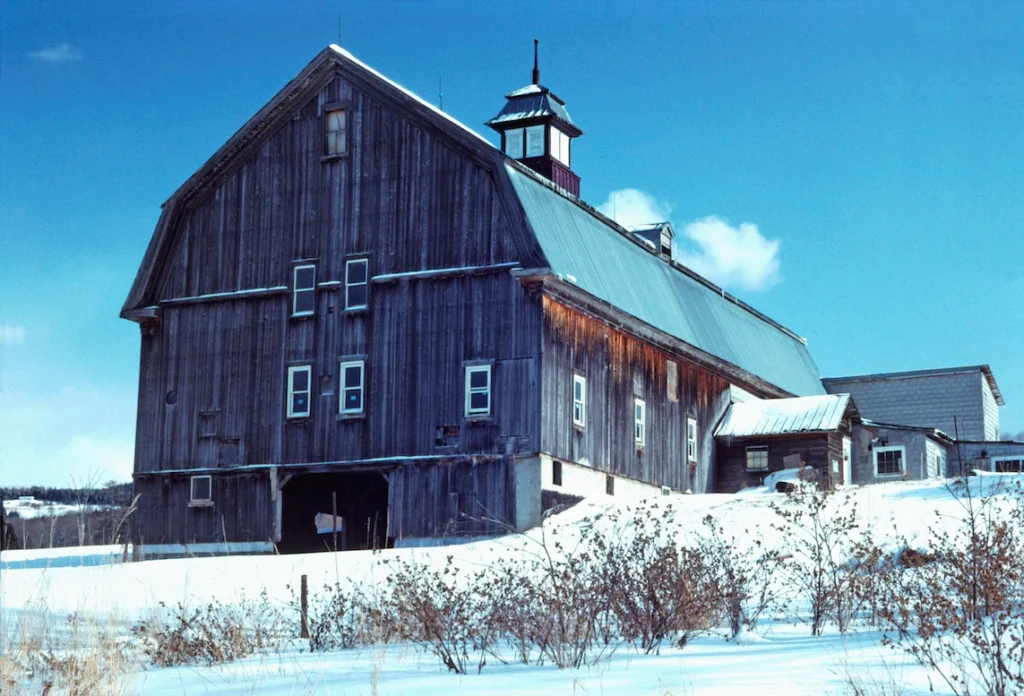
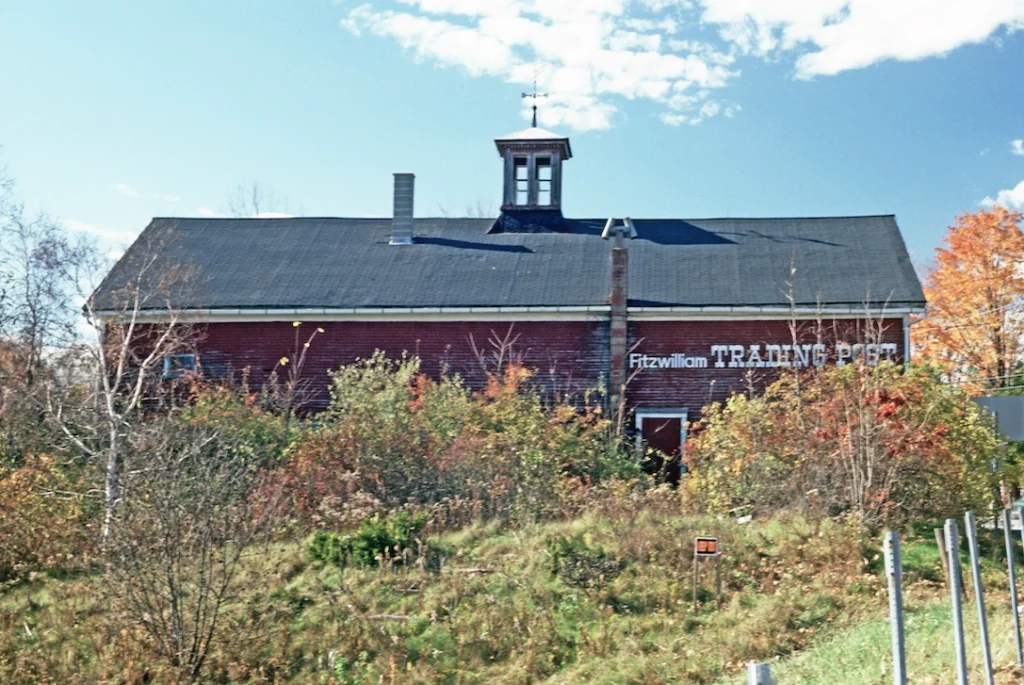
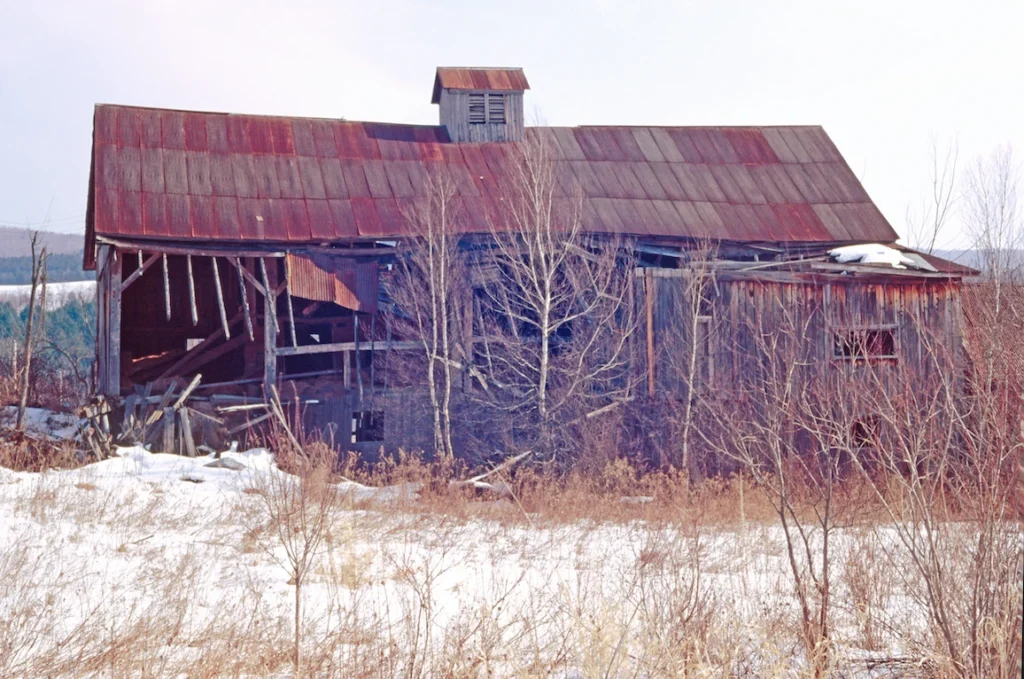
Fifty years of photographs. Fifty-two towns. Every barn in this book is gone.
- About the book
Monuments to the families that worked the land
These lost barns were more than old buildings. They were monuments to the New England farm families who struggled to make a living off the land — families who took pride in their farms and especially their barns.
To bring them back to life, I gathered stories from descendants of the families who worked these farms, and from local historians and historical societies. Without their stories, this would be little more than a book of old photos.
Over two centuries, New England has gone from an agricultural society to a technological one. The disappearance of barns is the visual metaphor for that change. There’s no going back, but we can look back.
“Karl Johnson has made an attempt to keep alive the memory of those barns that are no longer with us and preserve their legacy as part of the agricultural development of the region.”
John C. Porter · UNH Extension Professor Emeritus, co-author of “Preserving Old Barns”

- The author
Karl Johnson has been photographing barns since his thirties in Hollis, New Hampshire.
After graduating from the New England School of Art & Design, I spent more than 55 years as a graphic designer, copywriter, photographer and folk artist. I grew up on an old farm and have been interested in barns since childhood.
I was recently diagnosed with cancer and had my bladder removed. I’m now cancer-free, but the experience motivated me to do something with my photos while I still can. While digitizing the images, I realized that many of the barns I photographed were gone. So I researched them and wrote this book.
This is not a book about barns that can’t find their way home. It’s about a vanishing way of life — one that was still here in New England when I was a child and is now almost gone.
- Also by Karl Johnson
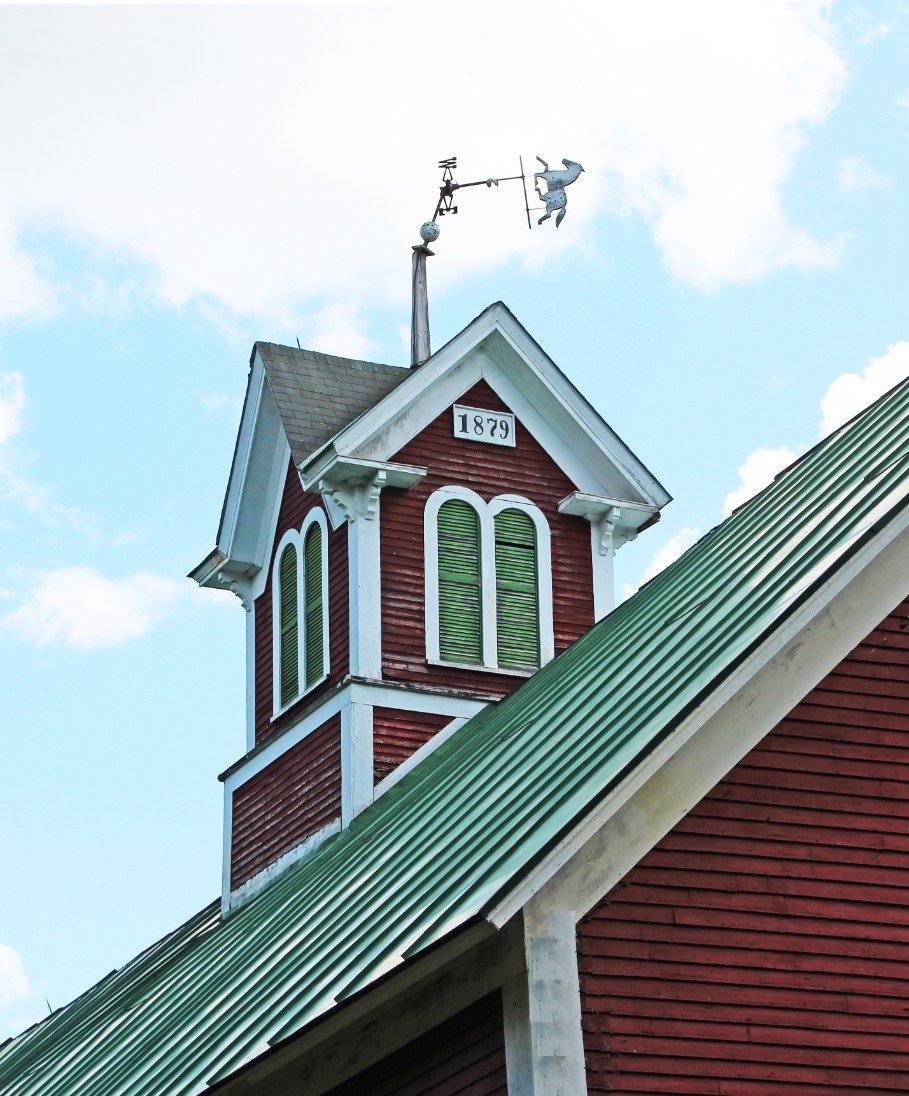
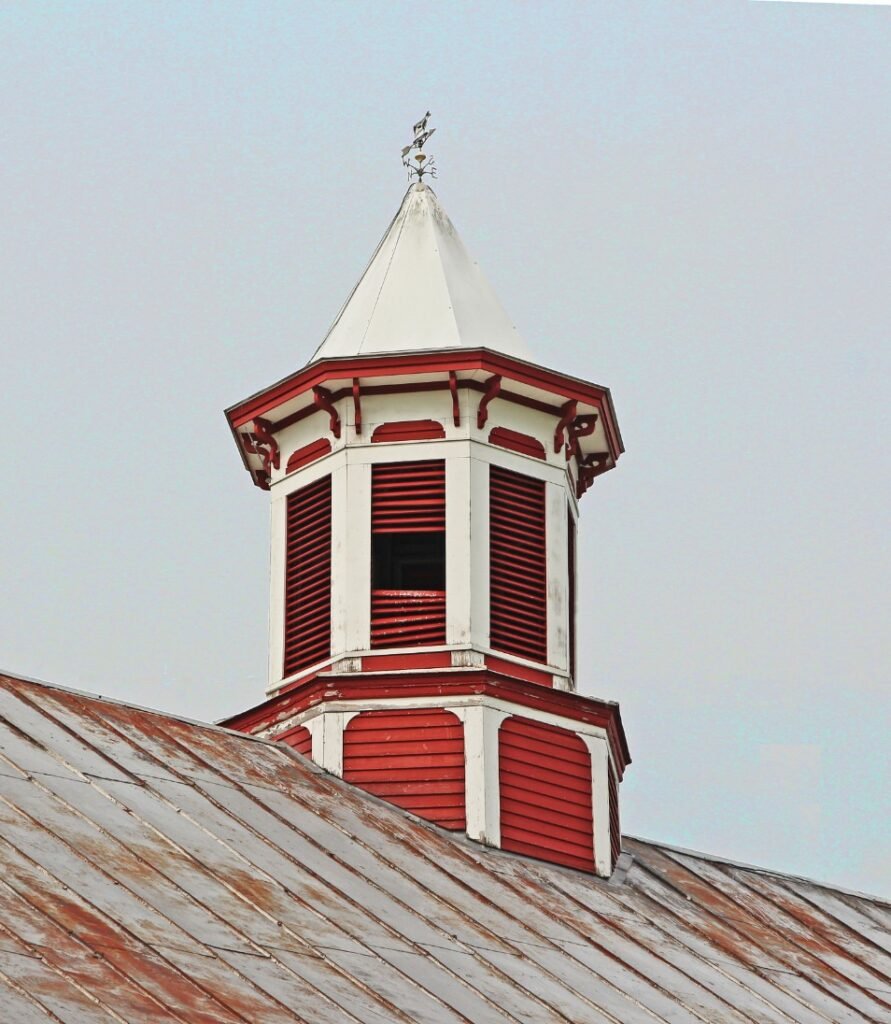
50 Barn Cupolas
Barn cupolas evolved from functional necessity. They became an architectural feature on barns because they served a purpose.
Cupolas provided necessary ventilation that prevented structural rot and hayloft fires. Decoration was secondary.
Every town in the book
Massachusetts · New Hampshire · Vermont · Maine · Connecticut · Rhode Island
Latest Blogs
- 5:02 pm
- October 12, 2026
Barns and the Golden Rectangle
Years ago, I met Dick Babcock, a man who knew more about old barns than anyone I ever met. Dick
- 5:00 pm
- October 12, 2026
Stalking the Elusive Barn
Some of the largest and most photogenic barns in New England were built along river valleys, where centuries of flooding
- 4:59 pm
- October 12, 2026
Searching for a Farm’s History
I was shocked when I first realized how many of the barns I had photographed were no longer standing. Some
One barn, One family, Once a month.
A single photograph and the story behind it — plus news of readings at historical societies and libraries across New England.